
Table of Contents
Millet Diet Plan:
A few months ago, I received a message from Ramesh, a 47-year-old software engineer from Bengaluru. He wrote:
“Tapas ji, my doctor told me I am pre-diabetic, I am 12 kg overweight, and my cholesterol is borderline high. I don’t want medicines yet. Can millets really help? Where do I even start?”
Ramesh’s situation is not unique. Millions of Indians today are caught in this exact crossroads — the body is sending warning signals, but they are not sure what to eat, how to eat, and how to begin.
My answer to Ramesh was simple: Start with a Millet Diet Plan. For just 7 days. And see the difference yourself.
Three months later, Ramesh sent me another message — his fasting sugar had dropped from 118 to 97, he had lost 5 kg, and his energy levels were the best they had been in a decade. He hadn’t taken a single tablet.
This blog is for every Ramesh out there.
What is a Millet Diet Plan?
A Millet Diet Plan is not a crash diet. It is not about starving yourself or eliminating your favourite foods overnight. It is a structured, sustainable shift where you replace refined grains — white rice, maida, processed wheat — with nutritionally superior millets, meal by meal, day by day.
As I always say: Millets are not a trend. They are a return to our roots.
Our grandmothers ate jowar rotis, ragi mudde, bajra khichdi, and foxtail millet pongal. They were lean, strong, and free of lifestyle diseases. We moved away from these grains in the name of modernization. The result? A diabetes epidemic, rising obesity, and record numbers of lifestyle diseases.
A Millet Diet Plan is simply about going back to what worked — with a modern understanding of nutrition.
Why Millets Work: The Science Behind the Millet Diet Plan
Before I share the 7-day plan, let me explain why millets are the ideal foundation for any health-focused diet.
1. Low Glycemic Index — Nature’s Blood Sugar Manager
| Grains | Glycemic Index(GI) |
| White Rice | 70–89 |
| White Bread (Maida) | 75–85 |
| Wheat Roti | 62–70 |
| Foxtail Millet | 50–54 |
| Barnyard Millet | 40–50 |
| Kodo Millet | 42–52 |
| Little Millet | 52–56 |
| Browntop Millet | ~41 |
When you eat white rice, sugar floods your bloodstream within 30–45 minutes. With millets, the same energy is released slowly over 2–3 hours. That’s the difference between a blood sugar spike and a steady, stable supply of energy.
2. High Dietary Fibre — Your Gut’s Best Friend
Millets contain 3 to 10 times more dietary fibre than polished rice. This means:
- You stay full longer — goodbye hunger pangs between meals
- Your gut microbiome thrives
- Your cholesterol levels improve naturally
- Constipation becomes a thing of the past
3. Rich in Micronutrients — What Modern Diets Miss
| Sl.No. | Nutrient | Benefit |
| 1 | Calcium (Ragi) | Stronger bones, ideal for women over 35 |
| 2 | Iron (Bajra, Foxtail) | Fights anaemia |
| 3 | Magnesium (Barnyard) | Reduces insulin resistance |
| 4 | B-Vitamins | Energy metabolism, nerve health |
| 5 | Zinc | Immunity, wound healing |
A 2021 meta-analysis published in Frontiers in Nutrition confirmed that long-term millet consumption lowered fasting blood glucose by 12% and post-meal blood glucose by 15% in diabetic subjects. HbA1c — the gold standard measure of diabetes control — dropped from 6.65% to 5.67% in pre-diabetic individuals.
These are not small numbers. These are life-changing results.
The Golden Rules of This Millet Diet Plan
Before we dive into the 7-day plan, here are the non-negotiable principles I share with every person I advise:
Rule 1: Soak your millets for 6–8 hours before cooking. Millets contain phytic acid, which blocks mineral absorption. Soaking neutralises this and makes millets easier to digest. Always soak. Always.
Rule 2: Rotate your millets. Don’t eat just one. Each millet has a different nutrient profile. Variety is nutrition. Rotating millets ensures you get the full spectrum of what they offer.
Rule 3: Start with 50% replacement, not 100%. If you’ve never eaten millets before, don’t shock your gut by eliminating rice overnight. Begin by replacing one meal a day with millets. By Week 2, scale to two meals. This plan is designed for beginners.
Rule 4: Pair millets with protein and healthy fats. Millets are complex carbohydrates. Pair them with dal, curd, eggs, or lean protein to create a complete, balanced meal.
Rule 5: Drink enough water. High-fibre diets need adequate hydration to work well. Aim for 8–10 glasses of water daily.
The 7-Day Millet Diet Plan
Important Note: This plan is a general wellness guide. If you have a specific medical condition — diabetes, kidney disease, thyroid disorders — please consult your doctor or a certified nutritionist before making dietary changes. Every body is different.
Day 1 — The Easy Start: Foxtail Millet Day
Best for: Beginners, those with diabetes or weight management goals
| Meal | What to Eat |
| Early Morning (6:30 AM) | 1 glass warm water + 5 soaked almonds |
| Breakfast (8:00 AM) | Foxtail Millet Upma with vegetables (carrots, peas, beans) + 1 cup green tea |
| Mid-Morning (10:30 AM) | 1 seasonal fruit (avoid mango or banana initially) |
| Lunch (1:00 PM) | Foxtail Millet rice (cooked like regular rice) + Dal + Sabzi + Curd |
| Evening Snack (4:30 PM) | Roasted makhana or a handful of peanuts |
| Dinner (7:30 PM) | Foxtail Millet Khichdi with moong dal + a small bowl of cucumber raita |
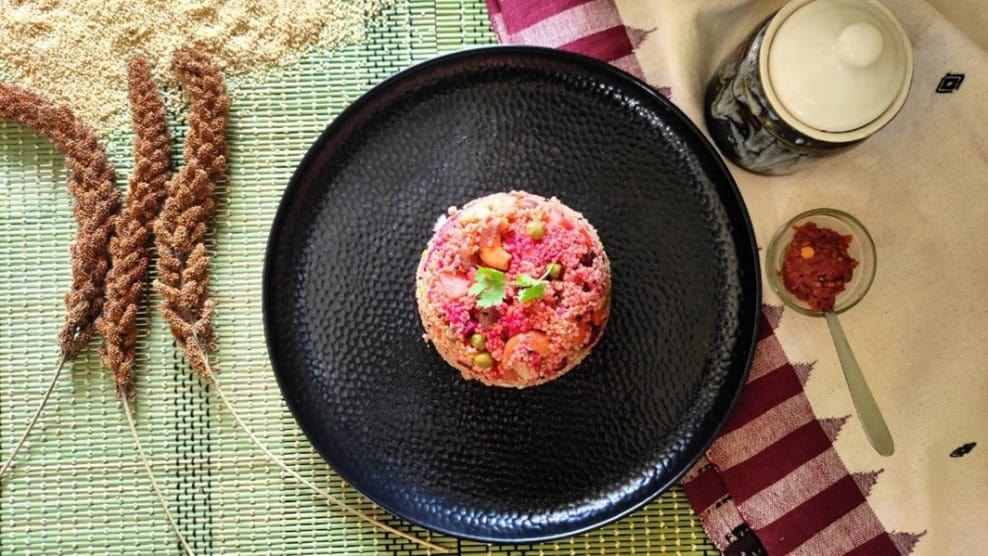
Why Foxtail Millet to start? It tastes the closest to rice, making the transition effortless. It is rich in iron, protein, and complex carbohydrates — ideal for the first day.
Day 2 — The Bone Builder: Finger Millet (Ragi) Day
Best for: Women, growing children, those with calcium deficiency
| Meal | What to Eat |
| Early Morning (6:30 AM) | Ragi malt with warm water and a pinch of jaggery |
| Breakfast (8:00 AM) | Ragi dosa with tomato chutney + sambhar |
| Mid-Morning (10:30 AM) | A glass of buttermilk |
| Lunch (1:00 PM) | Ragi roti (2 pieces) + palak dal + stir-fried vegetables |
| Evening Snack (4:30 PM) | Ragi biscuits (homemade) or ragi porridge |
| Dinner (7:30 PM) | Ragi mudde (traditional Karnataka-style) with rasam or dal |
Did you know? 100g of finger millet contains 344mg of calcium — more than any other grain. For reference, milk contains about 120mg per 100ml. Ragi is truly nature’s calcium supplement.
Day 3 — The Heart Warrior: Pearl Millet (Bajra) Day
Best for: Heart health, anaemia, winter months
| Meal | What to Eat |
| Early Morning (6:30 AM) | Warm water with lemon + soaked chia seeds |
| Breakfast (8:00 AM) | Bajra paratha with a teaspoon of ghee + curd |
| Mid-Morning (10:30 AM) | A handful of roasted chana |
| Lunch (1:00 PM) | Bajra khichdi with vegetables + a small bowl of curd |
| Evening Snack (4:30 PM) | Bajra thalipeeth or a small bowl of peanut chikki |
| Dinner (7:30 PM) | Bajra roti with dal fry + a seasonal salad |
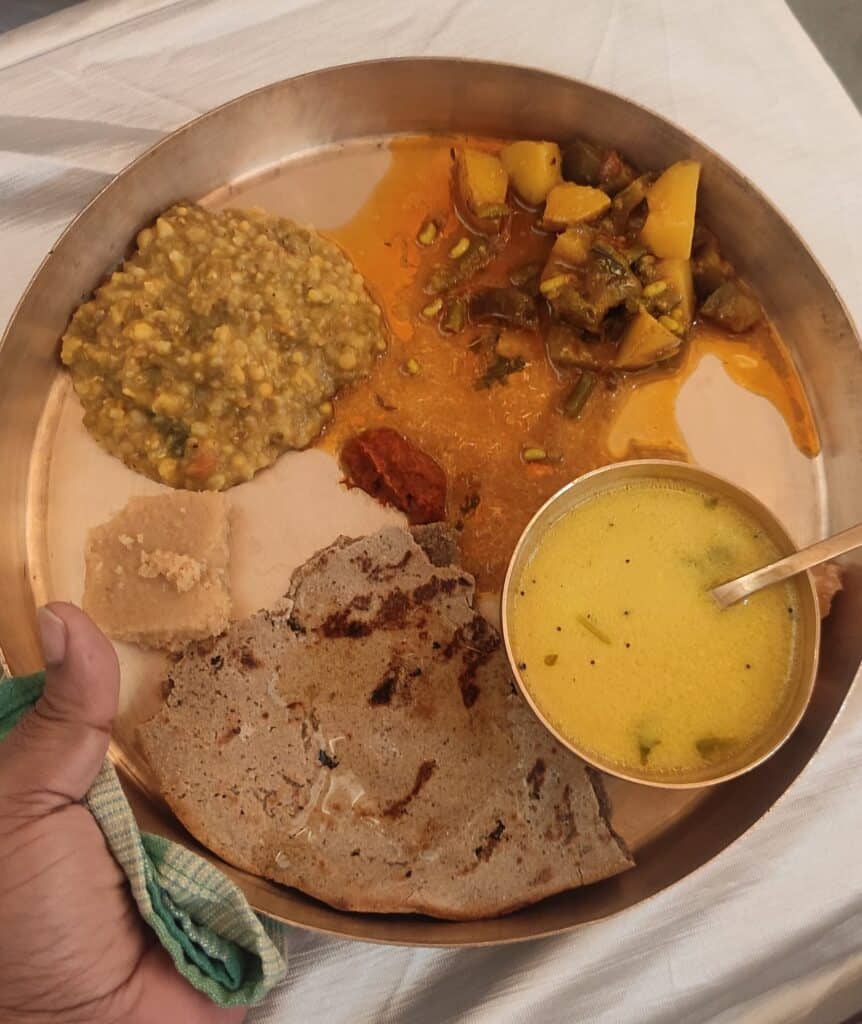
Bajra is exceptionally high in iron — making it the ideal grain for women, those with anaemia, and anyone who feels fatigued regularly. It also contains magnesium and potassium, which support heart health and help manage blood pressure naturally.
Day 4 — The Detox Day: Barnyard Millet (Sanwa) Day
Best for: Fasting, detox, diabetes management, weight loss
| Meal | What to Eat |
| Early Morning (6:30 AM) | Warm jeera water |
| Breakfast (8:00 AM) | Barnyard millet pongal with curry leaves and ginger |
| Mid-Morning (10:30 AM) | Green tea + walnuts (5 pieces) |
| Lunch (1:00 PM) | Barnyard millet rice + sambar + stir-fried greens + curd |
| Evening Snack (4:30 PM) | Coconut water or fresh lime water |
| Dinner (7:30 PM) | Light barnyard millet porridge with a pinch of turmeric and pepper |
Barnyard millet has the lowest glycemic index among all millets. It is also the grain traditionally consumed during Navratri and Ekadashi fasting — proof that our ancestors understood its detoxifying properties long before science caught up.
Day 5 — The Gut Healer: Kodo Millet Day
Best for: Digestive health, weight management, women’s hormonal balance
| Meal | What to Eat |
| Early Morning (6:30 AM) | Soaked methi seeds in warm water |
| Breakfast (8:00 AM) | Kodo millet idli with sambhar and green chutney |
| Mid-Morning (10:30 AM) | 1 cup of buttermilk |
| Lunch (1:00 PM) | Kodo millet rice + rajma curry + a side salad |
| Evening Snack (4:30 PM) | Roasted Kodo millet snack bar (store-bought or homemade) |
| Dinner (7:30 PM) | Kodo millet vegetable soup + 1 ragi roti |
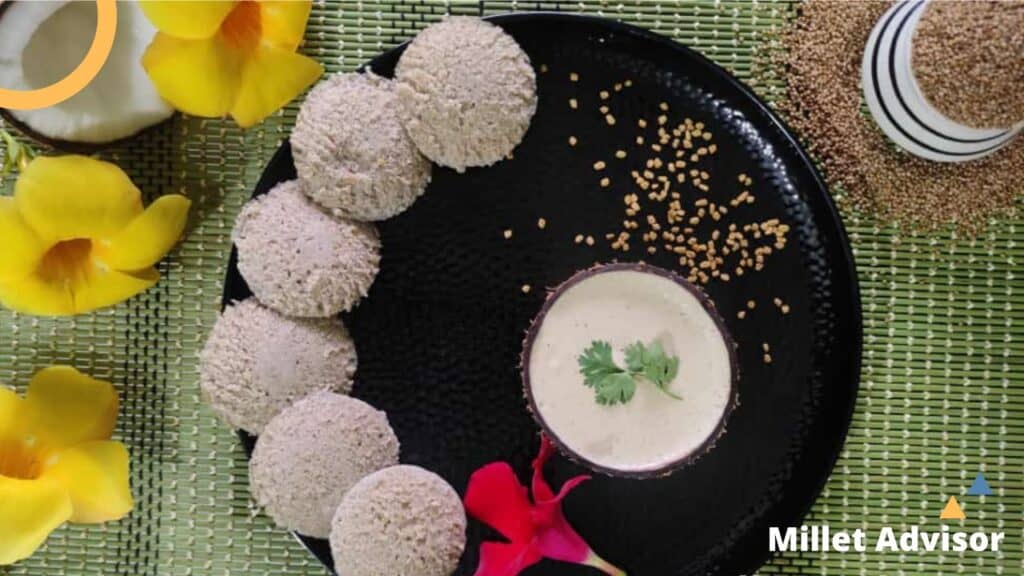
Kodo millet is particularly high in polyphenols and antioxidants. It fights free radicals in the body, reduces inflammation, and supports gut health. Research also suggests it supports hormonal balance in women, making it an excellent choice for those dealing with PCOS.
Day 6 — The Protein Power Day: Little Millet + Sorghum (Jowar) Day
Best for: Muscle health, post-exercise recovery, gluten-free diet
| Meal | What to Eat |
| Early Morning (6:30 AM) | Warm water with a pinch of turmeric and black pepper |
| Breakfast (8:00 AM) | Jowar dosa or jowar poha with peanuts and vegetables |
| Mid-Morning (10:30 AM) | A boiled egg or a small bowl of sprouts |
| Lunch (1:00 PM) | Little millet rice + chana dal + green vegetable + curd |
| Evening Snack (4:30 PM) | Jowar puffs (a healthy alternative to namkeen) |
| Dinner (7:30 PM) | Jowar roti + dal tadka + a small piece of jaggery |
Sorghum (Jowar) is 100% gluten-free and loaded with plant-based protein. For those transitioning off wheat due to gluten sensitivity or digestive issues, jowar roti is the most seamless replacement.
Day 7 — The Complete Millet Day: Rotation & Celebration
Best for: Building a long-term millet lifestyle
By Day 7, you have met all the major millets. Today, we celebrate with a full rotation:
| Meal | What to Eat |
| Early Morning (6:30 AM) | Ragi malt |
| Breakfast (8:00 AM) | Foxtail millet upma |
| Mid-Morning (10:30 AM) | A cup of bajra kheer (with jaggery, no sugar) |
| Lunch (1:00 PM) | Barnyard millet rice + dal + sabzi + curd |
| Evening Snack (4:30 PM) | Jowar puffs or millet chikki |
| Dinner (7:30 PM) | Kodo millet khichdi with ghee + a small salad |
By now, your gut has adapted. Your energy is more stable. Many people report improved sleep by Day 5–7. This is not coincidence. It is the millet effect.
What to Expect: Week by Week
| Timeline | What You May Experience |
| Days 1–3 | Slight bloating or gas (normal — your gut is adjusting) |
| Days 4–5 | Bloating reduces, energy becomes steadier, less cravings for sugar |
| Week 2 | Better sleep, improved digestion, reduced hunger between meals |
| Week 3–4 | Visible weight changes, improved fasting blood sugar, better skin |
| Month 2–3 | Measurable improvement in HbA1c, cholesterol, and BMI |
Millets to Avoid (or Limit) for Specific Conditions
Even millets are not one-size-fits-all. Here’s my guidance from the field:
| Condition | Caution |
| Thyroid (Hypothyroidism) | Limit bajra and jowar — they contain goitrogens. Soak and cook well before eating. |
| Kidney Disease | Moderate millet intake — high potassium may not suit advanced CKD. Consult your doctor. |
| Infants under 6 months | No millets. Only breast milk. |
| Severe Anaemia | Focus on iron-rich bajra and ragi, but pair with Vitamin C foods for better absorption. |
Q: Can I eat millets every day?
Q: Can millets replace rice completely?
Q: Are millets good for weight loss?
Q: Where can I buy good quality millets?
Q: Can children follow this diet plan?
A Real Story: How Priya Reddy Reversed Her PCOS with Millets
Priya Reddy, a 31-year-old teacher from Hyderabad, came to me through my newsletter. She had been struggling with PCOS for five years. Irregular cycles, unexplained weight gain, and insulin resistance.
Her gynaecologist had recommended dietary changes alongside medication. That’s when Priya started a structured millet diet plan — rotating Kodo, Foxtail, and Barnyard millets, eliminating white rice and maida completely, and eating local seasonal vegetables.
In four months, her insulin resistance markers improved, she lost 8 kg, and her cycles regularized. She wrote to me saying:
“I never imagined food could be medicine until millets proved it to me. I wish I had started earlier.”
Priya’s story is one of hundreds I have collected over my years of work in the millet ecosystem. These are not miracles — they are the result of returning to what our bodies were designed to eat.
Join the Millet Movement
Switching to a millet diet plan is not just about your health. Every time you eat millets, you are:
- Supporting a small millet farmer who is trying to earn a dignified livelihood
- Conserving water — millets use a fraction of the irrigation that rice requires
- Reducing your carbon footprint — millets are among the most climate-friendly crops on Earth
- Keeping alive a food culture that India built over thousands of years
One bowl of millet. One step toward a healthier you, a more prosperous farmer, and a more sustainable planet.
Conclusion: Your Body Deserves Ancient Wisdom
Our ancestors did not have nutritionists or diet apps. But they had millets — and they thrived.
Today, science has caught up to what traditional wisdom always knew. Millets lower blood sugar. They improve cholesterol. They support weight loss. They heal the gut. And they do all of this without side effects, without supplements, and without emptying your wallet.
As I always say: “One small change in our kitchen can bring a big change in the fields — and in our health.”
Start your 7-day millet diet plan today. Not next Monday. Not next month. Today.
And when you do — share your journey with me. Write to me at tapas@milletadvisor.com or drop a comment below. I read every message, and nothing makes me happier than hearing that millets have changed someone’s life. Because that is exactly why I do this.
Author: Tapas Chandra Roy, A Certified Farm Advisor on Millets, ‘Promoting Millets from Farm to Plate’ and an Author of two books -” Millet Business Ideas-Empowering Millet Startups” & MILLETS: The Miracle Ancient Grains. In a mission to take the forgotten grains-
Millets to Millions. To remain updated on my blogs on Millets please subscribe to my newsletter and for any queries please feel free to write to tapas@milletadvisor.com