Table of Contents
Shree Anna Abhiyan Model:
Every year, Koraput comes alive with colors, culture, and celebrations during PARAB, a national-level festival that showcases the rich tribal heritage of the region.
PARAB-2025 was even more special for us, as we had the opportunity to demonstrate the Shree Anna Abhiyan Model, presenting a comprehensive and holistic journey of the millet ecosystem from farm to plate.
This was not just a model. It was a story of Koraput, its people, its traditions, and its millets.
Koraput: The Land of Millet Diversity
Koraput is a land of diversity of landscapes, cultures, and crops. Millets have been grown here for generations, conserved by tribal wisdom and traditional practices. This is precisely why Koraput has been recognized under the Globally Important Agricultural Heritage Systems (GIAHS).
At PARAB-2025, we proudly showcased:
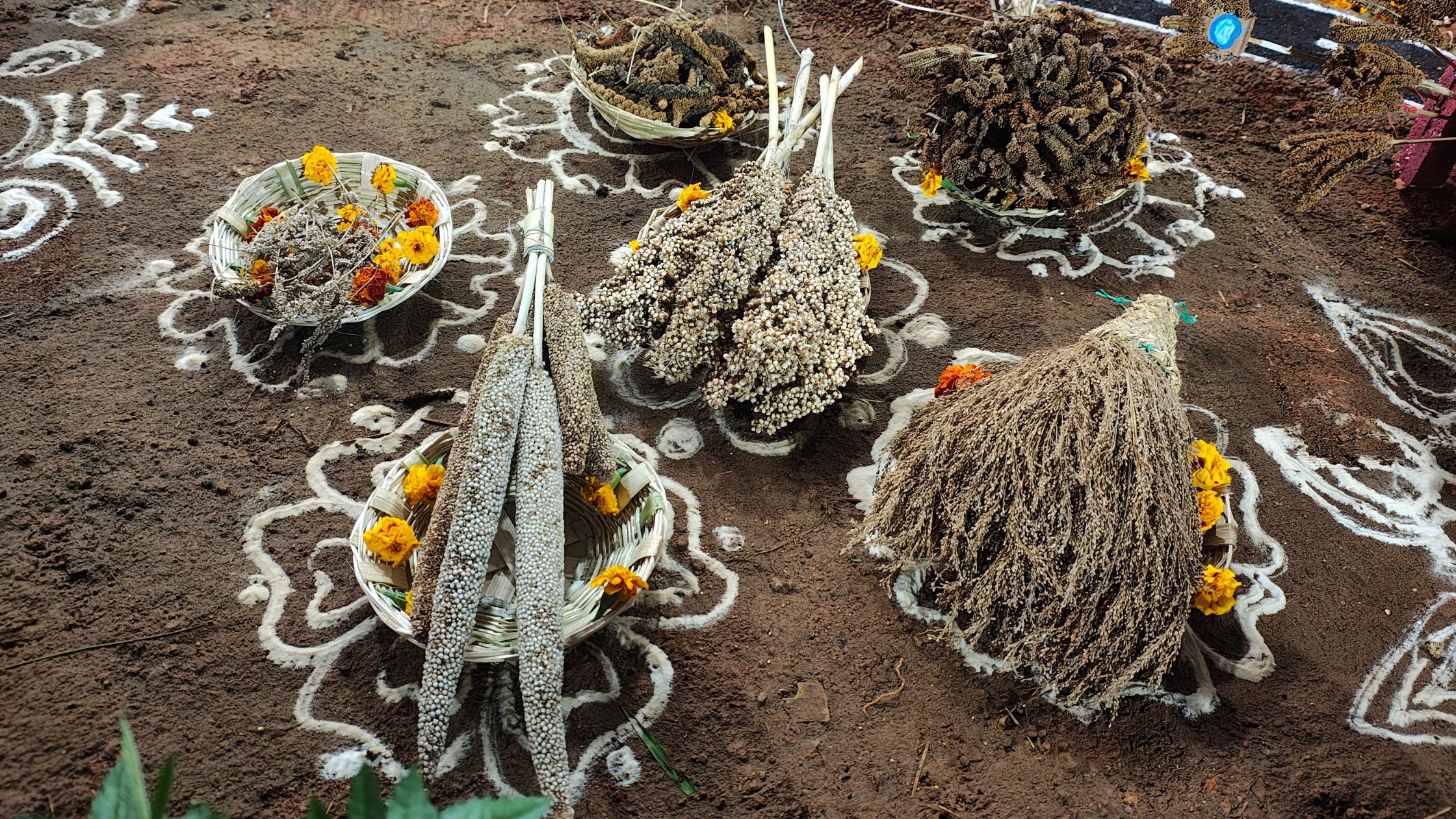
- Local landraces of millets
- A wide range of millet panicles grown in Koraput, beautifully decorating the model and symbolizing the region’s biodiversity
- These seeds are not just grains; they are living heritage, carefully preserved by Self Help Groups (SHGs) through community seed banks.
Seed Bank: Protecting the local landraces of Millets
Our model began at the Seed Bank, where local millet landraces are conserved and protected by SHGs.
This ensures:
- Seed sovereignty
- Climate resilience
- Preservation of indigenous varieties
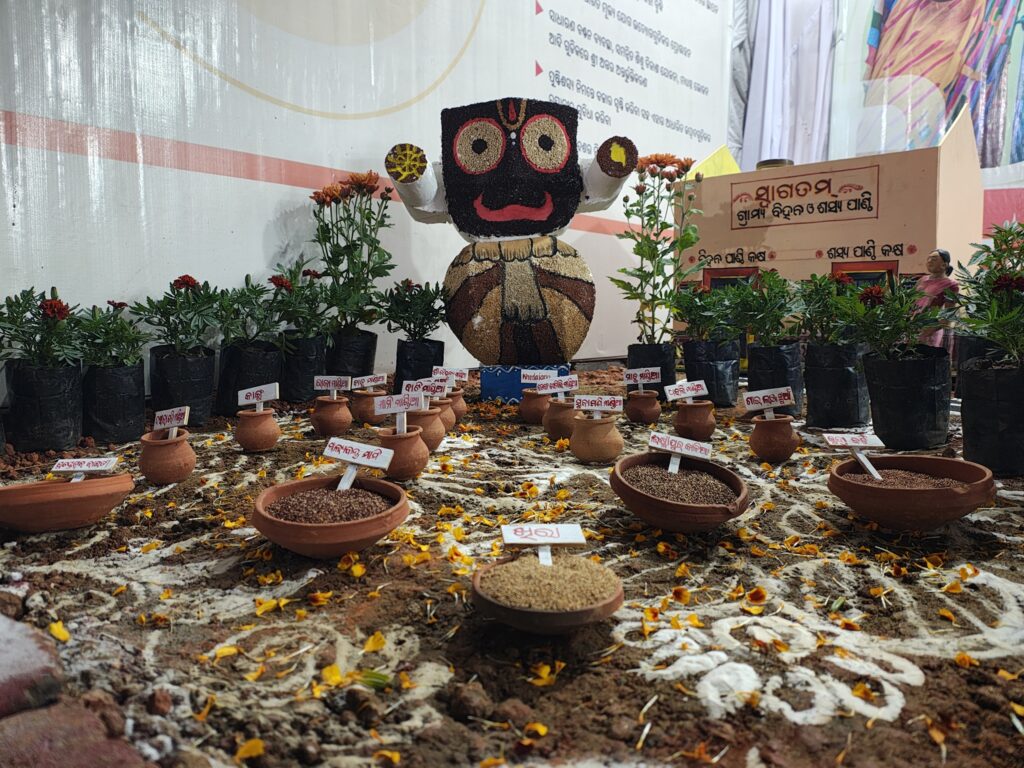
Shree Anna is deeply connected with Lord Jagannath and Odisha’s culture.
To reflect this sacred connection:
We made a beautiful idol of Lord Jagannath using different types of millets
Millets were offered to Lord Jagannath as a symbol of gratitude. A beautiful sand art of Lord Jagannath was created to promote the Shree Anna Abhiyan
Bio-Input Centre: Women Leading Natural Farming
At the Bio-Input Centre, tribal women demonstrated preparation of natural inputs essential for millet farming: Beejamrit, Jeevamrit, Brahmastra, Handi Khata & Vermicompost.
These practices promote natural farming, reduce dependency on chemicals, and move agriculture towards long-term sustainability.
When women lead farming innovations, agriculture becomes stronger and more inclusive.
Good Agronomic Practices of Millets:
The model highlighted scientific and improved agronomic practices, including:
- Line sowing of millets
- Participatory Varietal Trials (PVTs)
- Crop Diversification Blocks
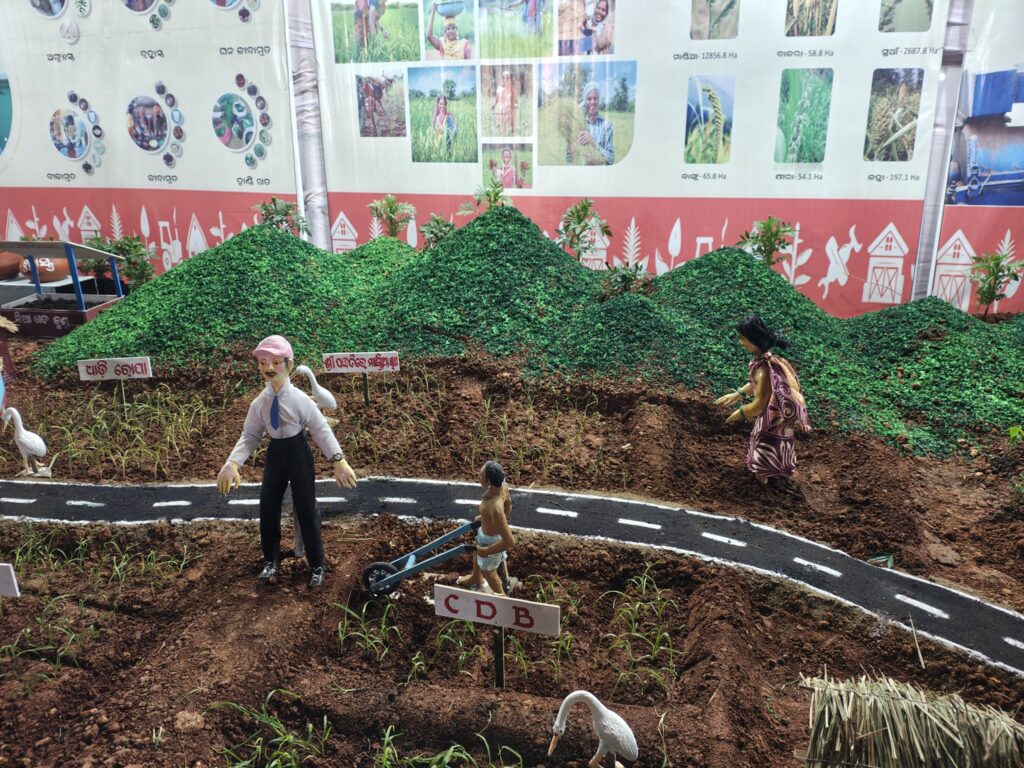
Farmer using cycle weeder, improving efficiency while reducing drudgery.
A scientist standing in the millet field symbolized the convergence of research, extension, and farmers.
Millets in the Lap of Nature:
One of the most admired sections was the beautiful depiction of Koraput’s hills and mountains, with:
Millet fields of Finger millet, Foxtail millet, and Jowar
A tribal village scene where women were harvesting and processing millets
This visual storytelling showed how millets grow in harmony with nature, perfectly suited to Koraput’s terrain.
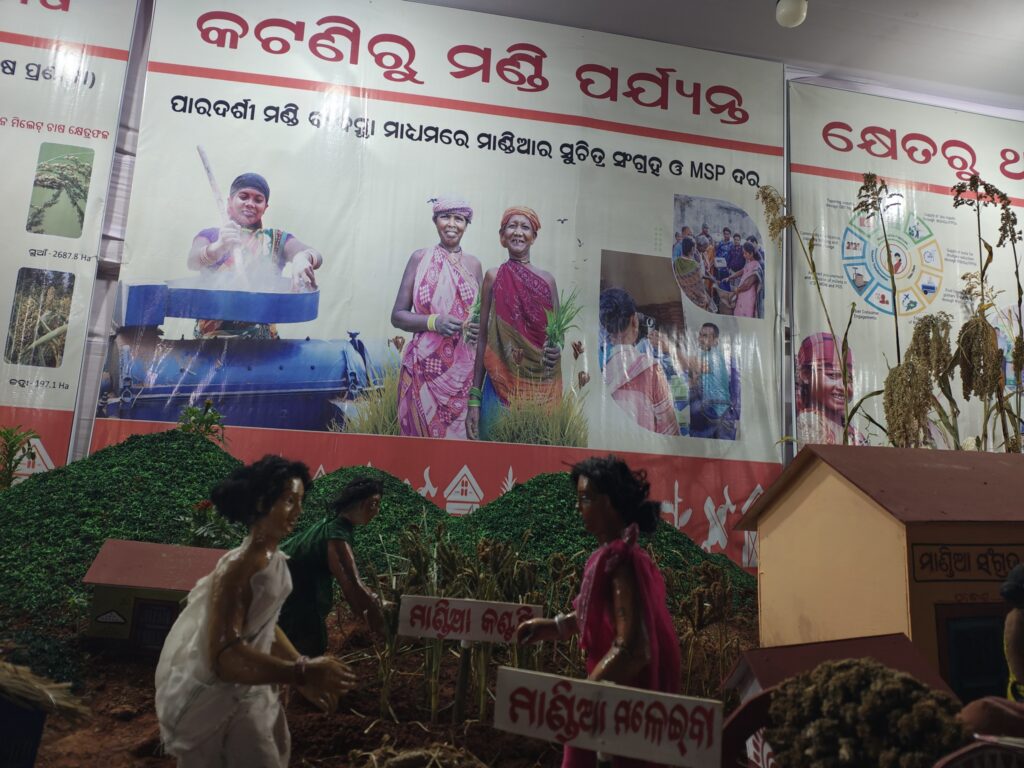
From Harvest to Market: Assured Procurement
Once millets are harvested and cleaned, the journey continues to the procurement centre.
Key highlights:
MSP of Ragi (2024–25): ₹4,886 per quintal
Procured ragi is stored at TDDCOL godowns
From there, it reaches people through the Public Distribution System (PDS)
This assures farmers of fair prices, income security, and market access.
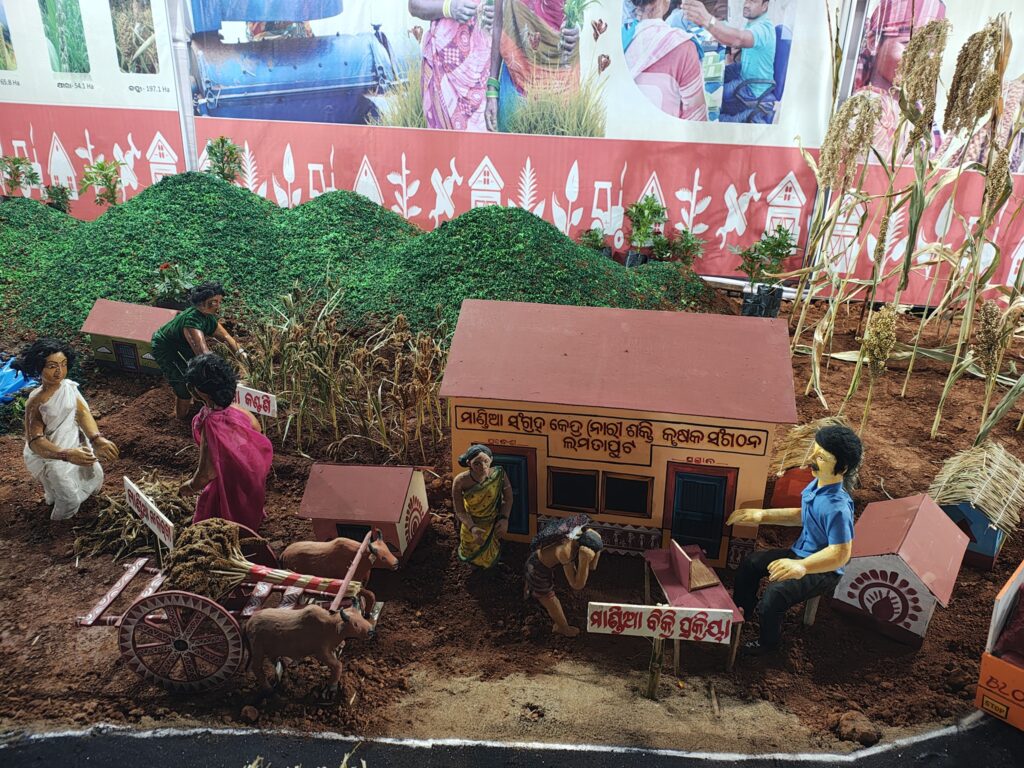
Millets on the Plate: Nutrition for the Next Generation
Millets finally reached the plate:
Ragi laddoos served in schools
School children learning about the nutritional importance of millets
This is where Shree Anna truly completes its journey, nourishing young minds and bodies.
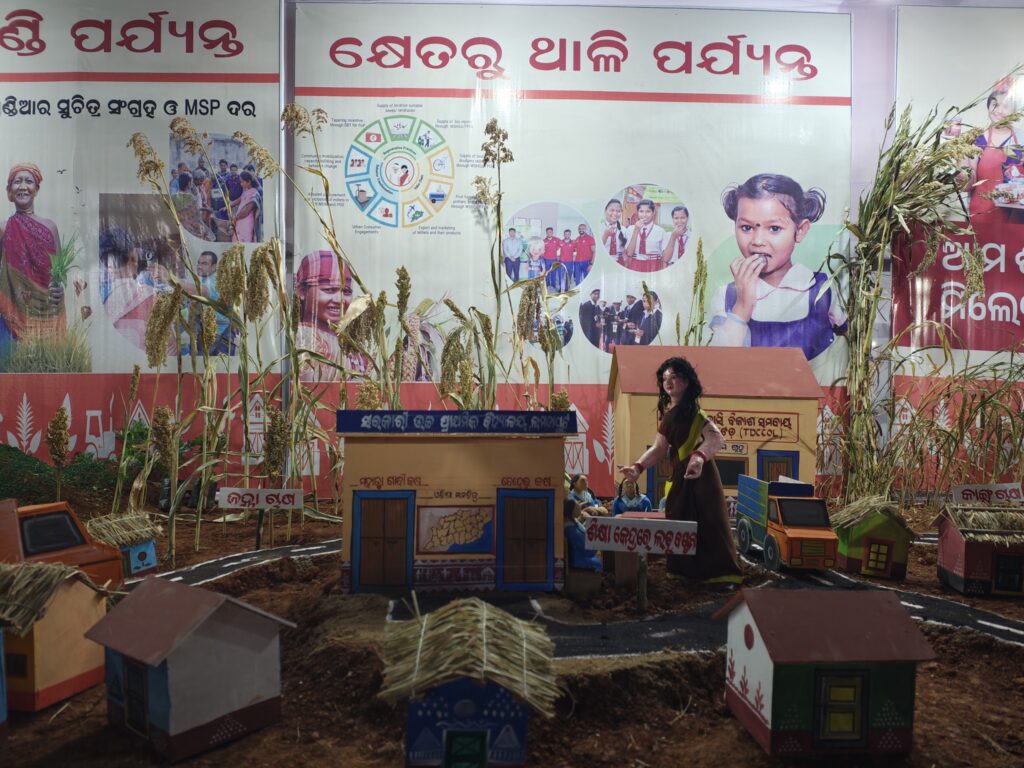
Millet Cafe & Tiffin Centre: SHGs Creating Livelihoods
We also showcased Millet Café and Millet Tiffin Centre
Both run by SHGs, proving that millets are not just healthy foods but also powerful livelihood opportunities.
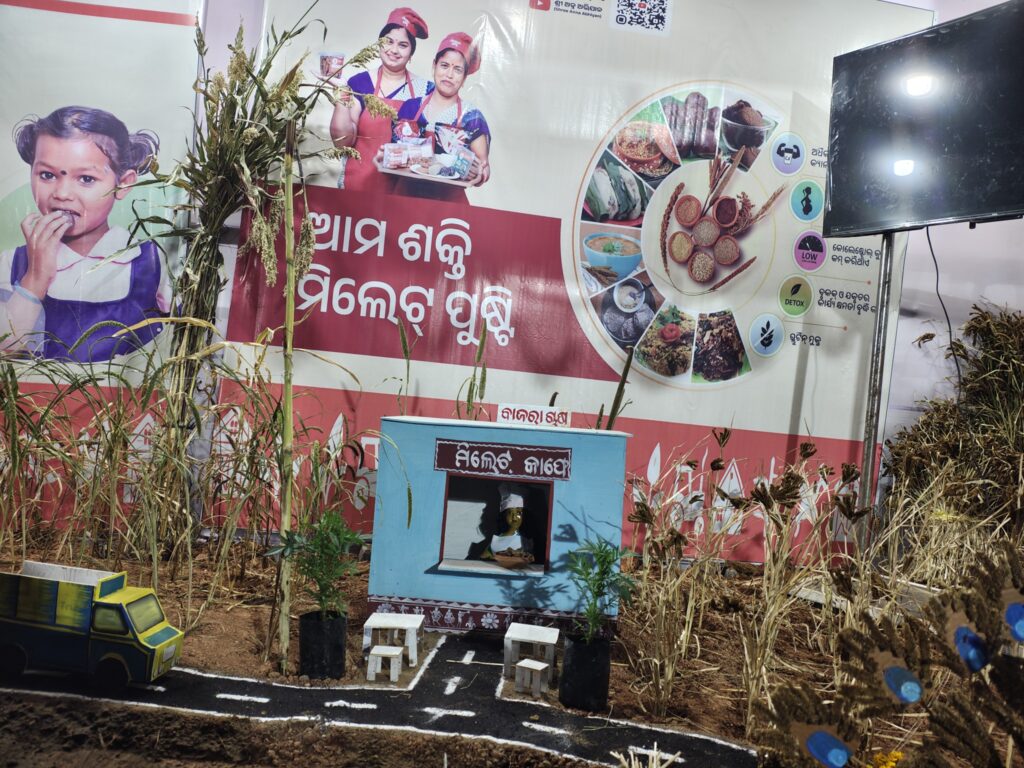
A Complete Millet Ecosystem Under One Roof
The Shree Anna Abhiyan Model at PARAB-2025 successfully demonstrated: Seed conservation, Natural farming, Scientific agronomy, Farmer participation, Assured procurement, Nutrition security, Women-led enterprises
It was truly a Farm-to-Plate millet ecosystem.
Let us come together to promote millets and build a healthier, more sustainable future.
Author: Tapas Chandra Roy, A Certified Farm Advisor on Millets, ‘Promoting Millets from Farm to Plate’, and an Author of the book -� Millet Business Ideas-Empowering Millet Startups�. In a mission to take the forgotten grains- Millets to Millions. To remain updated on my blogs on Millets, please subscribe to my newsletter, and for any queries, please feel free to write to tapas@milletadvisor.com